
In 2026, Contract Lifecycle Management (CLM) transcends its role as a digital filing cabinet. The next generation of platforms are intelligent, proactive, and deeply integrated business partners that transform static legal documents into strategic, value-driving assets.
The Three Pillars of Next-Gen CLM
1Generative AI & Intelligent Automation
|
2Hyper-Automation & Proactive Management
|
3Enterprise Integration & Usability
|
Deep Dive: Generative AI Automation
The most significant evolution in CLM is the move from reactive data management to proactive, AI-driven insights. These features automate complex tasks, uncover hidden risks, and accelerate business velocity by making contract intelligence instantly accessible.
Autonomous Negotiation AgentsAI agents can now autonomously handle negotiations for low-risk, high-volume contracts like NDAs. By using company playbooks, they reduce the burden on legal teams, allowing them to focus on high-value strategic work. This chart illustrates the potential reduction in manual legal effort on routine agreements.  |
Predictive Risk MeteringInstead of discovering risks during an audit, next-gen CLM platforms continuously monitor terms, regulations, and market data to assign a dynamic risk score. This visualization compares the traditional reactive approach to a modern proactive one, showing a significantly improved risk posture across key areas.  |
Deep Dive: Hyper-Automation & Management
Automation in 2026 is about more than just document generation. It’s about orchestrating the entire lifecycle and actively managing a contract’s value and obligations post-signature to prevent value leakage and ensure all parties meet their commitments.

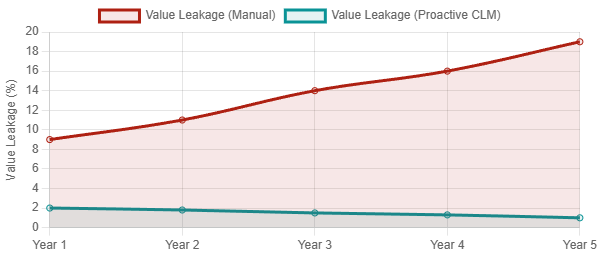
Proactive Obligation Tracking
Contracts lose 9% of their value on average due to missed obligations. Proactive CLM uses automation to track milestones, deliverables, and compliance, actively preventing this value leakage over the contract’s lifetime.
Deep Dive: Enterprise Integration & Usability
A CLM platform’s true power is unleashed when it becomes the central “system of agreement” for the entire enterprise. This requires deep, bi-directional data flow with other core business systems and a user experience that empowers everyone, not just lawyers.

Seamless, native integrations ensure that contract data flows freely between systems. This connects sales opportunities in the CRM directly to contract creation, and pushes obligation and financial data to the ERP, streamlining the entire quote-to-cash process.
Conclusion: The Strategic Imperative
Selecting a CLM platform in 2026 is a strategic business decision. The winning solutions are those that integrate deep, ethical AI to create a fully intelligent and proactive system that delivers tangible business value and mitigates risk autonomously.